From Sports Ideas to 3D Concepts: How AI Is Changing Equipment Design
Sports equipment has always been closely connected to design.
A helmet needs to protect the head while remaining comfortable to wear. A bicycle frame needs to balance form and function. A pair of sports shoes has to combine structure, materials, and visual identity. Even relatively simple equipment can involve many design decisions.
Before any of these products reach athletes, however, there is usually a long period of experimentation.
Designers sketch shapes, explore different proportions, compare materials, and create visual concepts. In recent years, AI 3D tools have introduced another way to explore these ideas.
Instead of developing every concept manually from the beginning, designers can use images and visual references to create early three-dimensional models. These models can then be examined, modified, and used to communicate different directions.
For sports brands, independent designers, and creative teams, this can make the early stages of equipment development more visual and easier to experiment with.
Sports Equipment Starts With a Visual Idea
Many sports products begin with a simple question:
What should this piece of equipment look like?
The answer can be influenced by the sport itself, the target audience, the brand, and current design trends.
A cycling helmet might be designed with a streamlined silhouette. A basketball accessory might use bold geometric elements. A pair of protective sports goggles might explore a futuristic appearance.
At the earliest stage, these ideas may exist only as sketches or reference images.
A two-dimensional drawing can communicate the basic concept, but it cannot always show how the object will look as a complete form.
This is where 3D visualization becomes useful.
A digital model can show the front, side, top, and rear of an object. Designers can rotate it, examine its proportions, and compare it with other concepts.
AI 3D generation can make it easier to reach this stage without first building the entire model manually.
See also: Building a More Responsive Inventory Strategy for Thai Businesses
Turning Reference Images Into 3D Equipment Concepts
A designer may already have a photograph or illustration that captures the direction they want.
Perhaps it is an existing helmet with an interesting silhouette. Maybe it is a pair of goggles with an unusual frame. Or it could be a completely unrelated object whose shape inspires a new sports product.
With an image to 3d workflow, that visual reference can become a starting point for a three-dimensional concept.
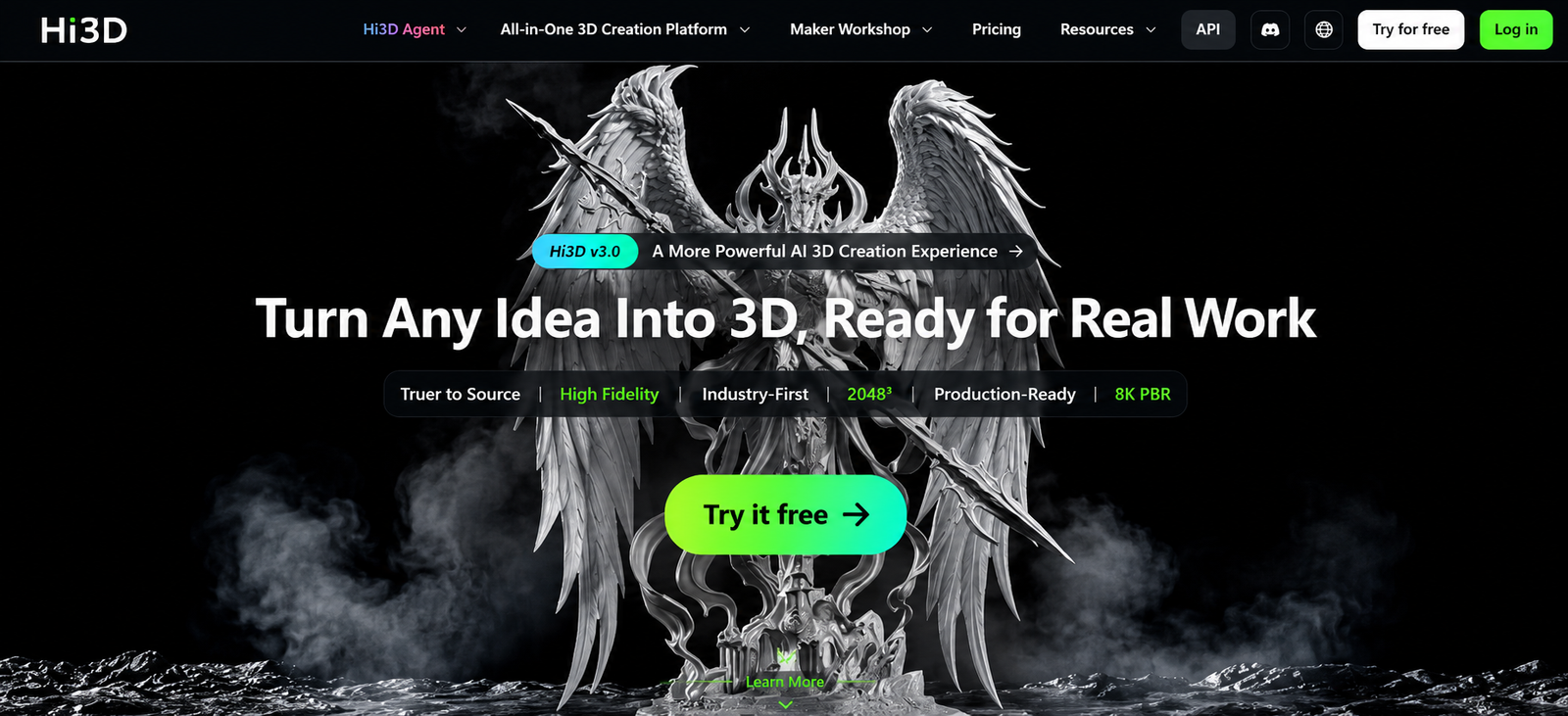
Hi3D allows users to upload image references and generate 3D models from them. Single-view images can provide a basic starting point, while multiple views can provide more information about the object’s overall shape.
This can be useful during brainstorming.
Instead of spending hours constructing several rough models simply to compare different silhouettes, a designer can use AI-generated models as early visual references.
The result does not need to be treated as a finished piece of engineering.
It can simply answer an earlier question: Does this idea work visually as a three-dimensional object?
Shape Matters More Than a Front View
Sports equipment is rarely viewed from only one direction.
An athlete may see a helmet from the side when looking in a mirror. A customer may examine a pair of shoes from several angles in a store. A product photograph may show an object from above or at an angle.
The silhouette therefore becomes an important part of the design.
A model that looks impressive from the front may appear completely different from the side.
This is one reason 3D exploration can be valuable.
A designer can rotate a generated model and look for inconsistencies in its proportions. A helmet might look too tall when viewed from the side. A piece of equipment may feel too bulky from the rear. A handle or grip might interrupt the overall visual balance.
These observations can lead to another round of changes.
The process becomes less about creating one perfect design immediately and more about discovering which shapes deserve further development.
Exploring Different Design Languages
Sports brands often have recognizable visual identities.
Some use clean and understated forms. Others favor aggressive lines, bright colors, or highly technical-looking surfaces.
AI 3D tools can provide another way to experiment with these visual directions.
Take a hypothetical running accessory.
The underlying product concept might remain the same, but the designer could explore several visual styles:
- A minimalist design with smooth surfaces
- A lightweight-looking design with sharp lines
- A futuristic design with geometric details
- A more organic design inspired by natural forms
- A bold design built around the brand’s visual identity
Seeing these ideas as 3D objects can make the differences more obvious than comparing sketches alone.
This is particularly useful during early discussions, when a design team is still deciding what visual language to pursue.
Texture Adds Another Layer
The surface of sports equipment can contribute strongly to its appearance.
A matte finish creates a different impression from a glossy one. A textured surface can make an object look more technical. Patterns can reinforce a team’s identity or distinguish one product line from another.
AI-generated textures can therefore become part of the concept exploration process.
Hi3D provides texture generation capabilities alongside its 3D modeling tools, including options for realistic and stylized visual treatments.
A designer can experiment with different surface directions without necessarily rebuilding the entire object.
For example, the same sports accessory could be visualized with a carbon-fiber-inspired surface, a simple matte finish, a colorful graphic pattern, or a more stylized appearance.
These are visual experiments rather than manufacturing specifications, but they can help teams understand how the final product might be perceived.
Designing Around the Athlete’s Perspective
Sports equipment is different from many other consumer products because it is often used while moving.
The object may be worn, held, carried, or attached to another piece of equipment.
That means designers need to think about the product from the user’s perspective.
A helmet is not simply an object sitting on a table. It becomes part of an athlete’s appearance.
A racket is not just a geometric shape. Its proportions and grip affect how it is held.
Sports accessories may also need to work with other equipment.
These practical considerations cannot be solved simply by generating a 3D model. They require testing, measurements, engineering, and knowledge of the specific sport.
However, 3D concepts can help teams discuss the visual and spatial side of these questions earlier.
A designer can show how a proposed form might sit on the body or interact visually with another object before moving toward a more detailed development stage.
Personalization Creates More Design Possibilities
Sports products are increasingly connected to personal style.
Athletes may want equipment that reflects their team, favorite colors, initials, or individual aesthetic.
This creates a large number of possible variations.
A brand might have one basic product shape but dozens of possible visual treatments.
3D models can make these variations easier to visualize.
Instead of preparing a separate flat graphic for every possible combination, a three-dimensional concept can provide a reusable foundation for exploring different appearances.
For example, a cycling helmet concept could be shown in different color schemes and surface patterns. A sports accessory could be visualized with different graphic elements. A team-oriented product could incorporate different visual identities while keeping the basic form consistent.
The advantage here is not simply speed.
It is the ability to explore more variations before deciding which ones are worth developing.
Creating Concepts for Sports Marketing
3D sports assets can also be useful outside the product development process.
A new piece of equipment may need to appear in advertisements, social media campaigns, websites, or promotional presentations before a physical production sample is available.
A digital 3D model can provide a flexible visual asset for these situations.
The object can be rotated, placed in different scenes, and shown from different viewpoints.
A sports brand developing a new product line could use a model during an internal presentation. A creative team could use it to explore campaign visuals. A designer could create early promotional concepts while the physical product is still being developed.
This creates a connection between product concept and marketing without requiring every visual asset to be photographed physically.
From Digital Concept to Physical Prototype
At some point, many sports equipment projects need to leave the screen.
A physical prototype can provide information that a digital model cannot.
Designers can evaluate the actual dimensions, weight, materials, ergonomics, and construction. Athletes can interact with the prototype and provide feedback.
For certain parts and accessories, 3D printing can also be useful during prototyping.
Hi3D supports common 3D formats including STL, OBJ, GLB, FBX, USDZ, and 3MF. These formats can serve different purposes depending on the next stage of the workflow.
STL and 3MF, for example, can be relevant to 3D-printing workflows, especially when you need to split 3d model for printing, while other formats may be more convenient for visualization or use in different 3D applications.
Still, an AI-generated model should not automatically be treated as a production-ready sports product.
Equipment that affects safety or performance requires appropriate engineering validation and testing.
The role of AI at this stage is better understood as part of the concept and prototyping process.
What AI Can and Cannot Decide
The appeal of AI 3D generation is that it can produce visual possibilities quickly.
But speed does not eliminate the need for human decisions.
An AI model does not know whether a helmet meets safety standards simply because the shape looks convincing.
It does not determine whether a shoe provides the required support.
It cannot replace material testing, ergonomic evaluation, structural analysis, or sport-specific engineering.
What it can do is help designers explore form.
That distinction is important.
AI can provide a starting model. Designers and engineers then decide whether the concept makes sense, what needs to change, and whether it is suitable for further development.
The technology becomes most useful when it expands the number of ideas that a team can examine without pretending to replace the expertise required to evaluate them.
Building a More Experimental Sports Design Process
Sports equipment design has traditionally involved a combination of sketches, physical prototypes, CAD, testing, and refinement.
AI 3D tools add another layer to this process.
A designer can begin with an image, generate a rough three-dimensional concept, inspect it from multiple angles, experiment with surface treatments, and compare several variations.
Some concepts will probably be discarded.
Others may reveal an unexpected direction.
A few may be worth developing into more detailed models and physical prototypes.
This makes AI particularly interesting as an experimentation tool.
Instead of committing to one concept too early, designers can explore a broader range of possibilities before investing significant time in a specific direction.
The Future of Sports Design May Be More Iterative
The most interesting change brought by AI 3D generation may not be the ability to create a model from an image.
It may be the way the technology changes the rhythm of design.
Generate.
Inspect.
Compare.
Modify.
Generate again.
For sports equipment, where shape, appearance, and user experience all interact, this kind of iteration can be valuable during early development.
Hi3D provides tools that support several parts of this process, from image-to-3D generation and texture exploration to flexible model export and 3D-printing-oriented workflows.
The final sports product will still depend on designers, engineers, manufacturers, athletes, and real-world testing.
But before all of those stages begin, there is a simpler step: imagining what the next piece of equipment could look like.
AI 3D tools are making that step faster, more visual, and easier to experiment with.